
![What is a Reefer container? Easy guide to how it works & prices [2024]](/_next/image?url=%2Fblog%2Freefer-containers-meaning-and-how-they-work-featured.jpg&w=1920&q=75)
A r****eefer container is crucial if you need to transport perishable or temperature-sensitive goods. Read this blog to find out all about the features and benefits of reefers. Plus, learn how you can source reefer containers at the best price from reliable suppliers today.
What is a reefer container?
A refrigerated container, or reefer, is designed to transport temperature-sensitive cargo at precise temperatures. Built to work as a large refrigerator, this container type can usually maintain any temperature between -30°C and +30°C.
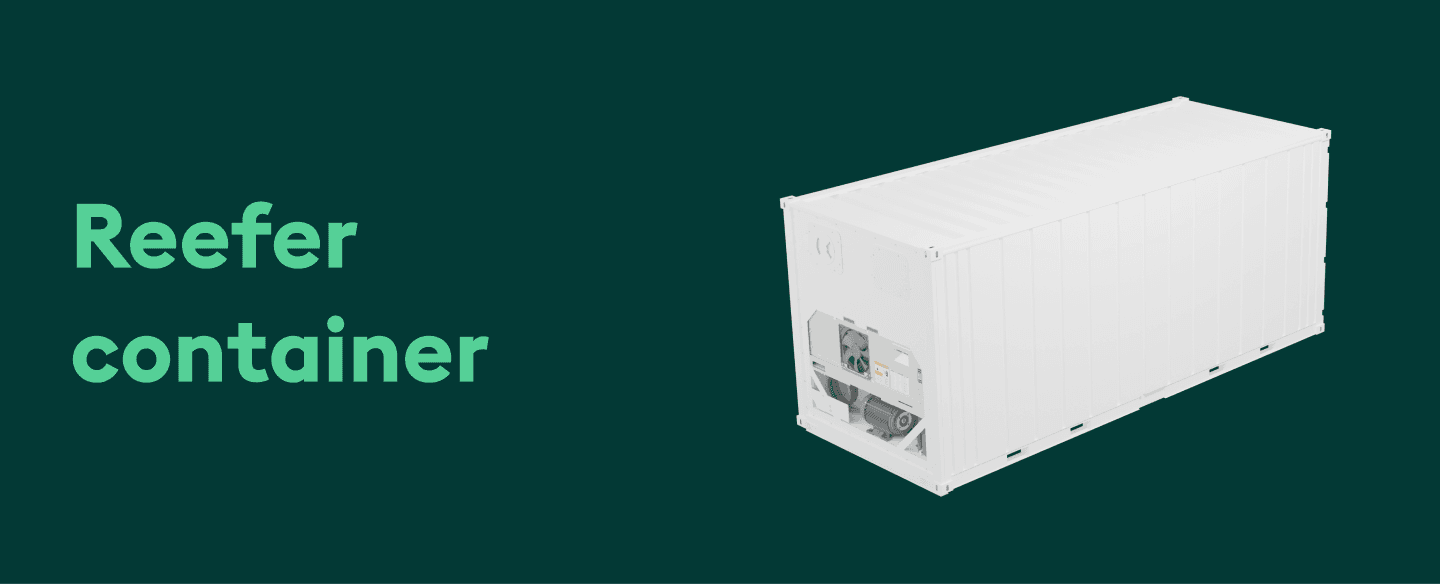
Reefers come with a refrigeration unit on one end. When connected to a power source, the unit fills the container with chilled air. In turn, this constant flow of air helps to maintain the desired temperature inside the unit.
Naturally, reefer containers are in high demand. Some businesses rely on their local network to meet their special container needs. However, this way they can never be too sure about the prices. And even if they’re willing to pay high prices, the container they need may not be available when they need them, especially at short notice.
That’s where Container xChange comes into the picture. We’re an online container trading and leasing marketplace with 50,000+ containers available in over 2,500 locations globally, including reefers.
Curious about how our platform works? Use our trading public search to browse and compare reefer container offers right now! Simply type in the container type and location, then hit the search button to get started.
What is a reefer shipping container used for?
Did you know that apart from shipping temperature-sensitive goods, reefers are also used for to transport standard shipping containers? Take a look at the uses of reefer containers in detail below.
Shipping refrigerated goods
Some of the most commonly shipped refrigerated food items include:
- Meat (frozen and chilled),
- Seafood
- Fruits and vegetables
- Milk and dairy products
- Processed food
- Juice and beverages
- Wines
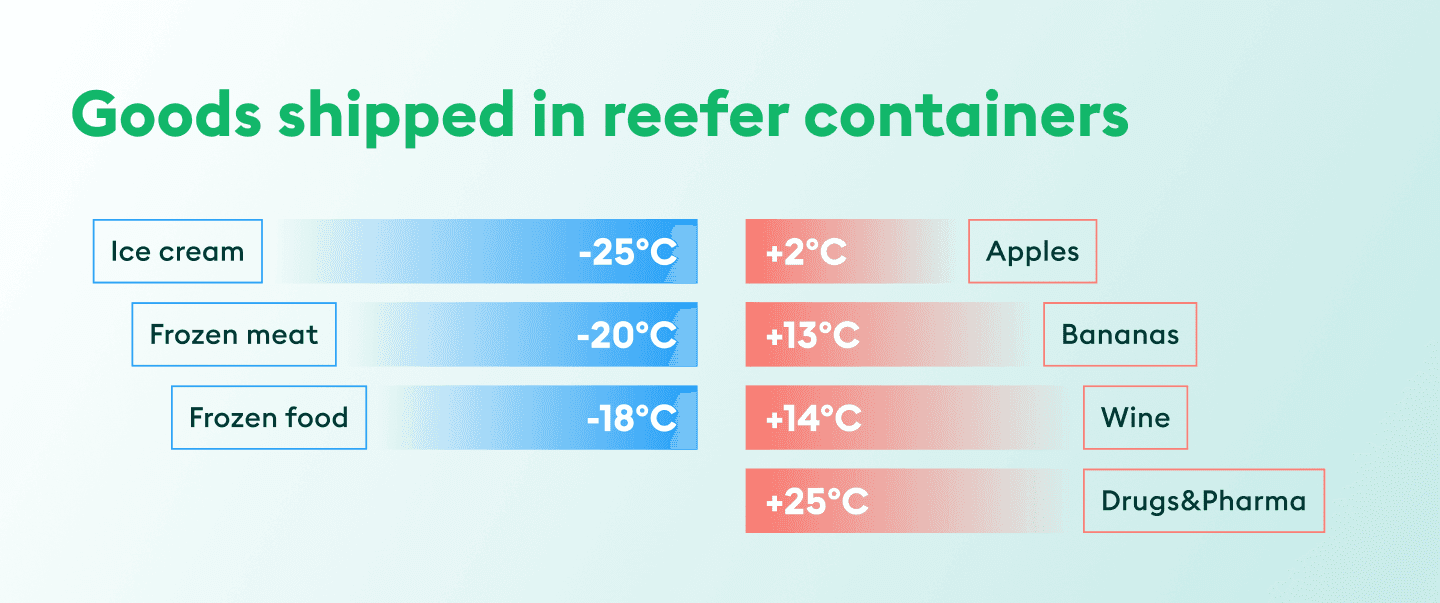
Shipping pharmaceuticals
Drugs and pharmaceuticals are also usually shipped in reefers. Reefer containers played a vital role in the Covid-19 crisis. As the nations entered into lockdown, reefer containers made it possible to ship medicines and vaccines wherever they were needed.
To ensure that all safety regulations are met and that reefers are in prime condition to transport pharmaceuticals, these containers undergo regular inspections. That’s why it’s important to Reefer Container Maintenance and Reefer Container Repair whenever required.
Shipping dry cargo as a Non-operating Reefer (NOR)
While a reefer container isn’t built to ship dry cargo, it still does. In fact, you’d be surprised to learn just how regularly reefers carry dry cargo. All you’ve got to do is deactivate the refrigeration unit, and voila! Your reefer is now a standard dry container.
Non-operating reefer (NOR) is a refrigerated container with the refrigeration turned off. Now, why would anyone want to do that? The answer is to empty container repositioning. The nature of the trade is such that almost every third container in the world is shipped empty. This is not only wasteful, but also very expensive for container owners.
Even with the issue of empty containers, it can be difficult to get your hands on empty containers in your desired location, within your budget. This is most likely due to having a small local sourcing channel.
However, on xChange you can expand your sourcing pool and connect with 1500+ vetted members from around the world, anytime, from anywhere. Through our platform, you can find multiple offers for all container types and dimensions, including reefers within seconds. You can then compare the prices and choose the best deals for your needs.
Want to give it a try right now? Click the banner below and check out the prices of reefers in your location today.

How do refrigerated containers work?
You must’ve learned by now that a refrigeration unit is pivotal for maintaining cold temperatures within a reefer. But several other features work together in order for reefers to function. Let’s take a few minutes to understand how reefer containers work now.
Maintains cool temperatures
The refrigeration unit distributes the chilled air through the floor of a reefer container. If you look closely, the floor of this container type has grooves, also known as T-shaped decking. This T-shaped decking allows a constant supply of cool air to circulate.
If you’re planning to use a reefer, it’s important to note that it cannot reduce the temperature of your goods. A reefer container only maintains the desired temperature. So, you’ll have to pre-cool your cargo to the temperature you want the reefer to maintain first.
Genset provides electricity
’Genset’ is short for generator set. It provides electricity to the refrigeration unit in order for it to work. A reefer is usually connected to a power source on shipping vessels. But for extremely sensitive cargo that spoils quickly if not at its ideal temperature, gensets provide a backup power source. It’s best to use a genset-equipped reefer to ensure the safety of your cargo.
Ventilation keeps goods fresh
The entire point of a reefer container is to keep your goods fresh. Fruits and vegetables release heat, water, and CO₂. If these gasses aren’t removed, they can damage the cargo by causing uncontrolled ripening and aging, not to mention altering flavor. Therefore, reefers must be kept ventilated at all times.
Maintains relative humidity
Different cargo requires different humidity levels. A dehumidification setup helps maintain the right levels of humidity in a reefer.
Data loggers monitor supply air temperature, return air temperature, ambient temperature, and humidity level continuously with the help of remote modems.
Drainage gets rid of excess water
A reefer container also has a sophisticated drainage system. In case of water accumulation, the drain in the container will remove the waste, preventing flooding and damage to goods.
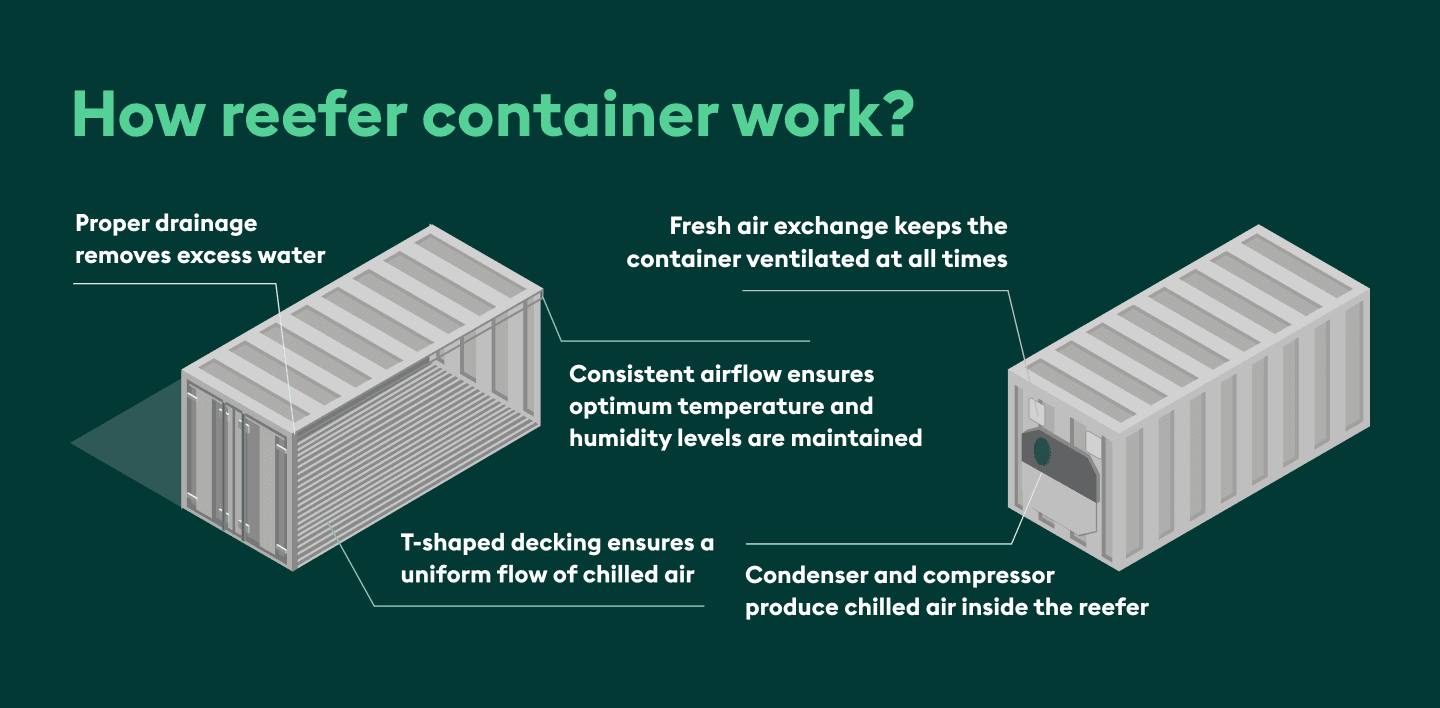
Now that you know how a reefer container works, it’s time you started looking for reefer containers for your cargo. To do that, you’ll need to know the dimensions of reefers of various sizes. Read on to find out more.
Dimensions of a reefer container
Most containers are manufactured according to standard sizes set by the Learn more Although this may vary slightly depending on the container manufacturer. Here are the dimensions of 20ft, 40ft and 40ft HC reefer containers.
| Measurement | 20ft Reefer | 40ft Reefer | 40 HC Reefer |
| Internal length | 17.9 ft / 5.44 m | 37.9 ft / 11.56 m | 38.0 ft / 11.58 m |
| Internal width | 7.5 ft / 2.29 m | 7.5 ft / 2.28 m | 7.5 ft / 2.29 m |
| Internal height | 7.5 ft / 2.27 m | 7.4 ft / 2.25 m | 7.9 ft / 2.40 m |
| Tare weight | 3,080 kg / 6,790 lbs | 4,800 kg / 10,584 lbs | 4,480 kg / 9,880 lbs |
| Payload capacity | 27,400 kg / 60,417 lbs | 27,700 kg / 61,079 lbs | 29,520 kg / 65,080 lbs |
| Cubic capacity | 999 cu ft / 28.3 m³ | 2,093.3 cu ft / 59.3 m³ | 2,380 cu ft / 67.3 m³ |
How do you stow cargo in reefer shipping containers?
Once you’ve narrowed it down to the right size, the next step is to figure out how you should stow your goods.
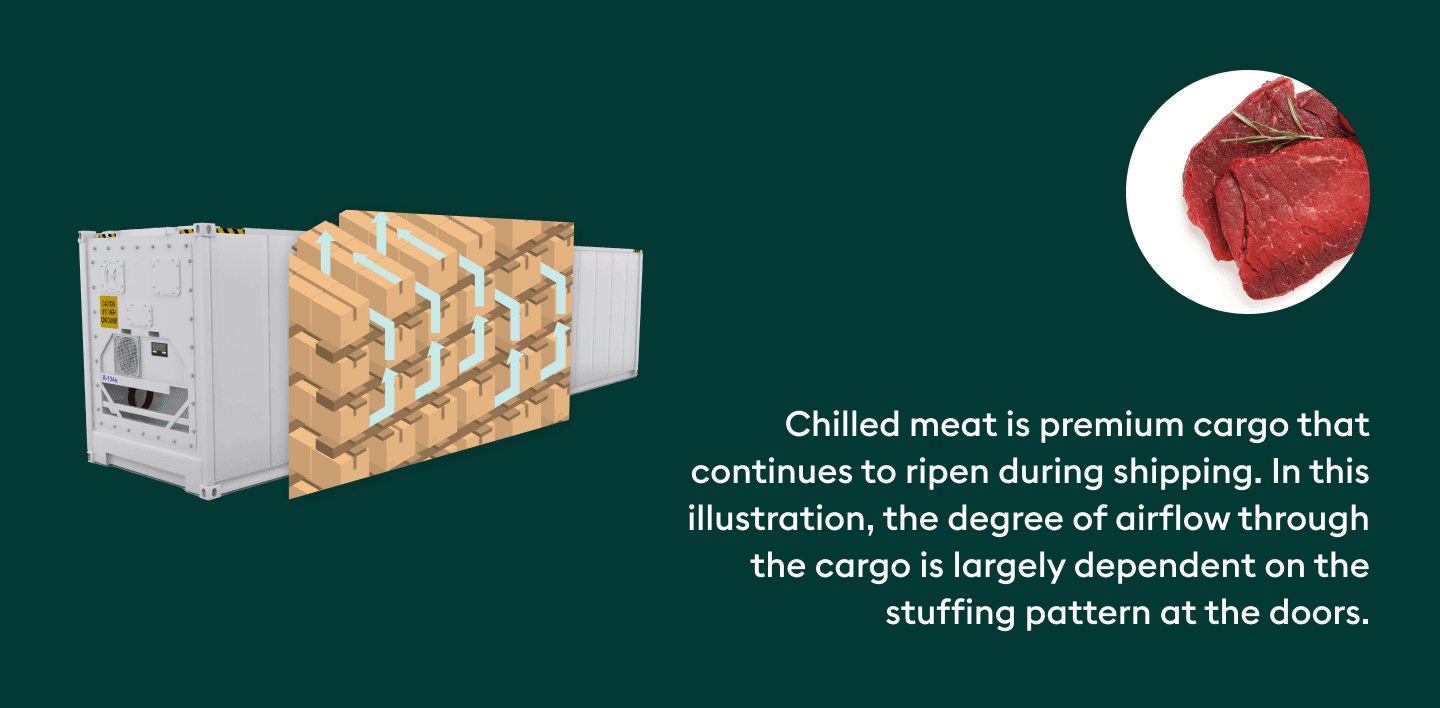
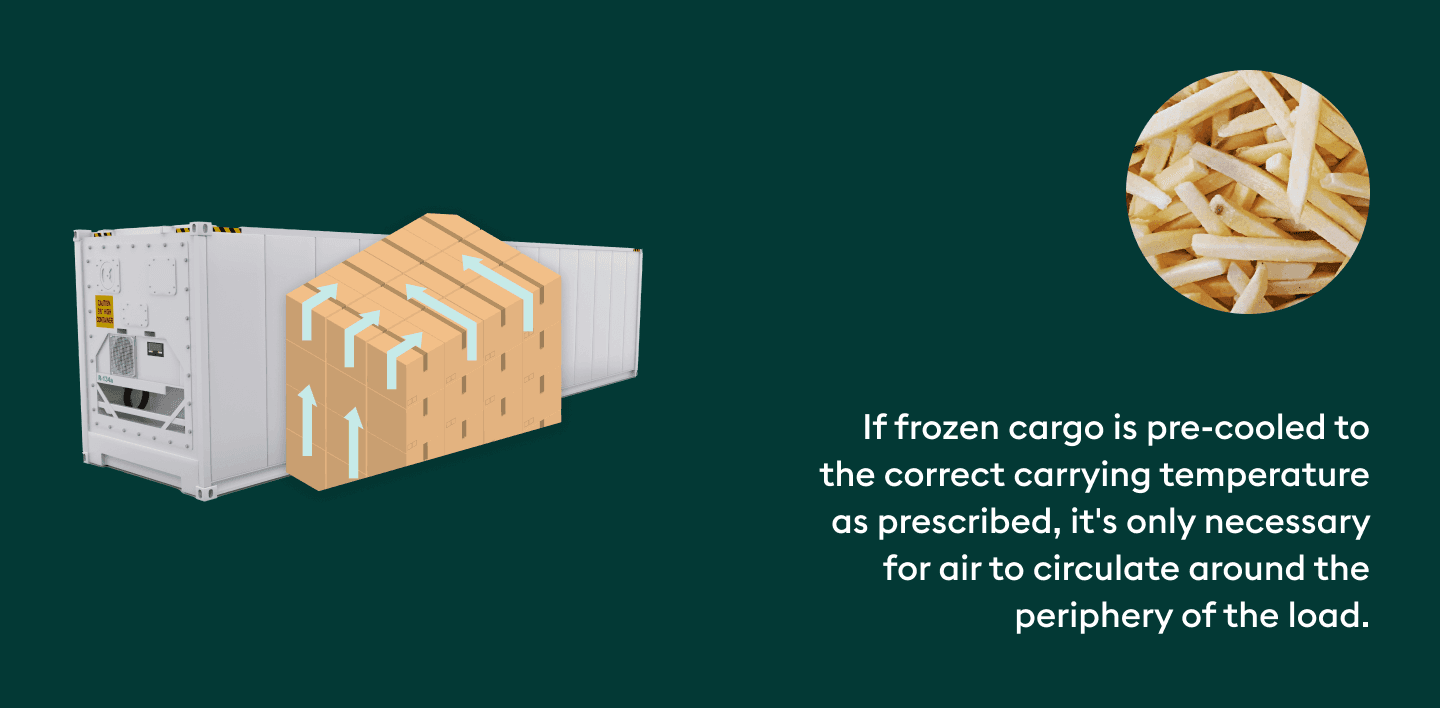
As you know by now, internal air circulation keeps the temperature stable inside a reefer. This airflow is affected by the type of packaging and the method of stuffing. So, different goods have to be stowed differently to ensure constant airflow.
For instance, you have to send a shipment of chilled meat from Australia to South Korea. To retain its shelf life in Korean markets, you’ll have to load and stow the cargo in such a way that the air flows through it constantly. This airflow will remove heat and gasses produced by the cargo, as well as keeping the reefer Ventilated Container.
Now, let’s take a look at what happens when you’re shipping frozen goods.
Say you have a shipment of ready-to-make frozen French fries. If these aren’t stowed properly, they’re texture, taste, and quality may be negatively affected. And you certainly don’t want that! So, you’ll have to stack the goods tightly, making sure there aren’t gaps. Blocking the airflow will help to keep the food at a low temperature.
How much do reefer containers cost?
Before you start searching for reefer containers to buy, it’s important to know what you can expect to shell out, so you can spot a good deal when it comes a long, and avoid being ripped off. Check out how much you’ll pay for 20ft, 40ft and 40ft HC containers in popular locations around the globe below:
| Location | 20ft reefer | 40ft reefer | 40ft HC reefer |
| China | $4,706 | $6,200 | $5,060 |
| USA | $13,965 | $6,315 | $7,086 |
| India | $6,784 | $6,836 | $7,573 |
| UAE | $7,000 | $5,755 | $5,308 |
| Europe | $7,567 | $3,849 | $6,067 |
Buy reefer containers at the best price on Container xChange
So now you’ve got the full lowdown on reefer containers. The final step? Sourcing them from reliable suppliers at prices that suit you.
At Container xChange, you can choose from 50,000+ containers available in 2500+ locations around the world. All you have to do is:
- Decide on your criteria (container type, condition, location)
- Hop onto our trading platform to browse offers that fit your requirements
- Negotiate the price directly with the supplier
- Pay for your containers safely
On xChange, we offer 100% market transparency, so you can be sure you’re getting the best prices. Browse through multiple offers in one dashboard, and choose the deal that suits your budget and terms. Plus, you won’t be charged any commission on your deals.
What’s more, all 1500+ members on our platform are vetted and pre-approved, so you can rest assured you’re only working with reliable partners.
Lastly, we manage all of your payments through the learn more about xChange Wallet. This way, you can make 100% secure transactions and keep track of all of your payments in one place.
Want to get started buying reefer containers at the best prices today? Click the banner below to set up your free demo of xChange now. You’ll get a sneak peek of our trading platform and a chance to ask any burning questions you may have. Your days of struggling to find reefer containers when and where you need them are finally over with Container xChange.

What are the dimensions of a reefer container?
A standard 40ft reefer container has an internal length of 11.56m / 37.9ft, an internal width of 2.28m / 7.5ft and an internal height of 2.25m / 7.4ft. It has a cubic capacity of 59.3 m3 / 2,093.3 cu ft and a payload capacity of 27,700 kg / 61,078 lbs.
How does a reefer container cost?
The cost of a reefer container varies depending on various factors including the container condition, location and current market situation. For a cargo-worthy 40ft reefer in the US you're looking at US $6,315, in China, US $6,200 and in Europe US $3,849.
How does a reefer container work?
Reefer containers have a refrigerated unit on one end. They work by allowing air to circulate around the container, keeping it at a constant temperature. Reefers can maintain any temperature between -30°C and +30°C.